Historic-Home Cooling: Adding AC to a Home Without Ductwork
Historic homes are charming — until summer. Here's how to add efficient, comfortable cooling to a home that was never built for ductwork.
Maryland is full of beautiful historic homes — Victorian cottages, prewar bungalows, century-old farmhouses. They have character that new construction can't match, and one big drawback: most were never built for central air. If you're sweating through summers with noisy window units, here's how to add real cooling without harming the home you love.
Why Ductwork Is the Problem
Central air needs ducts to move conditioned air, and retrofitting ductwork into a historic home is invasive and expensive. It often means tearing into plaster walls, soffiting ceilings, and losing closet space — sometimes altering the very features that make the home special. For many older homes, traditional central air simply isn't practical.
The Solution: Ductless Mini-Splits
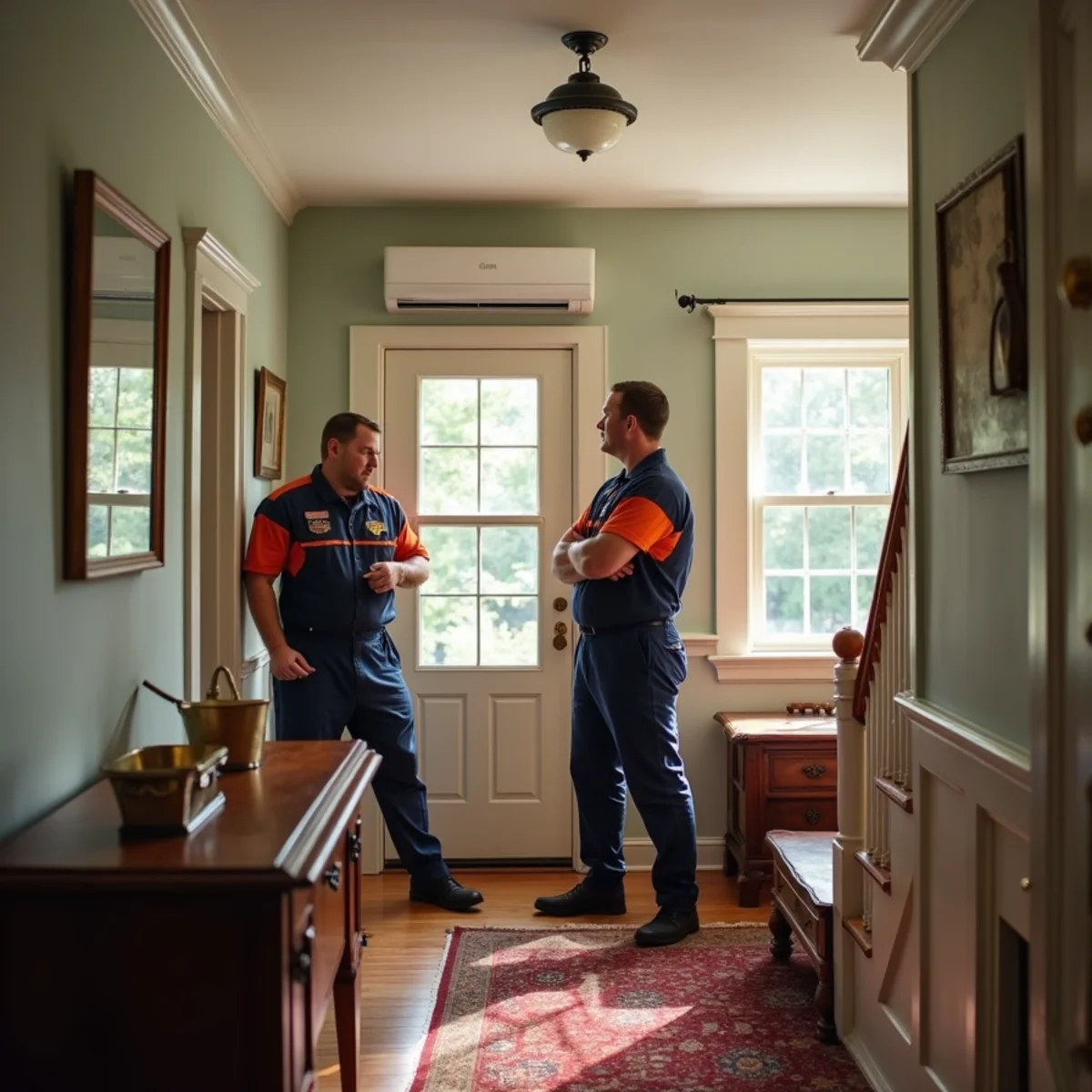
Ductless mini-split systems solve this elegantly. An outdoor unit connects to one or more slim indoor air handlers through a small line set that needs only a three-inch hole in the wall — no ductwork required. Each indoor unit cools (and heats) its zone independently, so you get efficient, quiet comfort room by room.
- No invasive ductwork — preserves walls, ceilings, and character
- Zoned control so you only cool the rooms you're using
- High efficiency that lowers operating costs versus window units
- Quiet operation and better humidity control than window ACs
- Doubles as efficient supplemental heat in winter
Preserving Your Home's Character
We approach every historic installation with a preservation mindset — placing indoor units and line sets discreetly, and working carefully around original features. In historic communities like Kensington and even the waterfront homes of Annapolis, ductless systems let homeowners modernize comfort without compromising what makes their home historic. Our AC installation team handles the design and install end to end.
Why Historic Homes Fight Central Air
The features that make an old home charming are the same ones that make ductwork a nightmare. Plaster-and-lath walls, solid masonry, narrow chase spaces, and rooms that were never designed around forced-air distribution leave nowhere to run supply and return trunks without tearing into finished surfaces. Retrofitting traditional central air often means dropped soffits, boxed-in corners, and lost closet space — altering the very character owners are trying to preserve.
That's why so many historic-home owners default to window units, which are noisy, inefficient, block the windows they were built around, and still leave rooms uneven. A ductless mini-split sidesteps the whole problem, which is why it's become the standard solution for older homes.
How a Ductless Install Respects the Architecture
A ductless system connects an outdoor unit to slim indoor heads through a line set that needs only a three-inch hole through the wall — no ductwork at all. The art is in the placement: we route line sets discreetly, tuck the outdoor unit out of primary sightlines, and position the indoor heads where they cool effectively without dominating a room. In historic communities like Kensington and the waterfront homes of Annapolis, that careful approach adds modern comfort while leaving the home's character intact.
Because each indoor head is its own zone, ductless also solves the uneven-temperature problem historic homes are famous for — you condition only the rooms in use, at the temperature each one needs. Pairing the system with indoor air quality upgrades handles the humidity these older homes often struggle with, too.
Don't Forget Air Quality
Older homes often struggle with humidity and air quality too. Pairing a ductless system with our indoor air quality solutions — like dehumidification and filtration — keeps a historic home comfortable and healthy through humid Maryland summers. Call P&Y at (831) 461-3437 to explore your options.
Need Help From a Local Pro?
P&Y Heating and Cooling is here 24/7 for Montgomery County. Call for fast, licensed service and a free estimate.
Call (831) 461-3437